

Business model
A dual model by design
Proprietary cloud-based software, distribution through major strategic partners, and a solutions ecosystem that scales without rebuilding the underlying technology. UbitelCare's model is designed for rapid growth once the initial distribution agreements are in place.

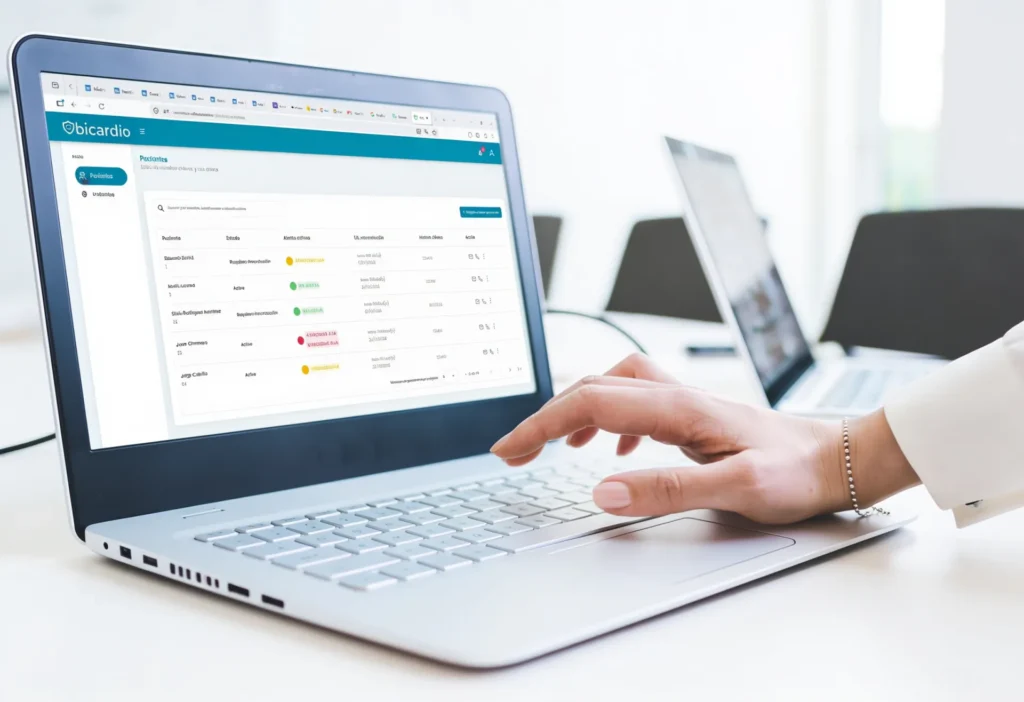
The core asset: proprietary software
UbitelCare's differentiating value lies in its proprietary software: cloud-based algorithms, with protected intellectual property, capable of processing clinical series in real time and translating them into understandable and actionable information. It is a pure software model, and it rests on four key decisions:
- Proprietary algorithms — real-time processing of clinical series, translated into actionable information
- Protected intellectual property — registered as a scientific work (2024) and computer program (2025), with full ownership by UbitelCare SL.
- Third-party hardware — wearables and sensors with medical CE marking, no own inventory or capital burden
- Real scalability — the marginal cost of each new user or hospital is much lower than that of the first.
Wellness and clinical solutions coexist on the same technological foundation, each with a distinct purpose and regulatory framework. This modular architecture is a structural competitive advantage: each new solution reuses the existing platform, drastically reducing the cost and development time of each module.
Each area is an independent market, with its own buyers, adoption cycles, and competitive dynamics. UbitelCare doesn't depend on the growth of a single segment: it can grow in several simultaneously on the same infrastructure. Bioimpedance acts as a cross-cutting technology that enriches the analysis in all of them.
01
Cardiology
Ubicardio: heart failure and arrhythmias.
02
Nephrology
Care-Nefro: chronic kidney patient and on dialysis.
03
Respiratory rehabilitation
Care-Rehab: e-rehabilitation in COPD.
04
Welfare
Care-Fitness: cardiovascular health and sport.
UbitelCare does not sell directly to end users or enter into hospital-to-hospital contracts. Its model is different: strategic alliances with large corporations and operators—telecommunications, healthcare providers, hospital groups, and insurers—that act as last-mile distributors. They provide the market network and customer relationships; UbitelCare provides the physiological interpretation technology they lack.
For investors, this model has three direct consequences: longer sales cycles but larger contracts, scalability without proportional growth in the structure, and a lower risk of concentration by diversifying channels and geographies. It is complemented by direct B2B agreements with healthcare institutions, paid pilot projects as an entry point, and integration of the technology into third-party platforms through licensing or revenue sharing.

For the end user
A true understanding of physiological behavior, less complex data, and improved self-care. In the clinical setting, this translates to better monitoring and greater continuity of care.
For distribution organizations
Greater added value in its service catalog, better end-user involvement, and differentiation from generic market solutions.
For the healthcare system
Improved monitoring of chronic patients, optimization of healthcare resources, and support for value-based care models and telehealth home hospitalization.
What you will find in the dossier
- Investment deck
- Financial plan and projections
- Detailed pricing model
- Intellectual property
- Cap table